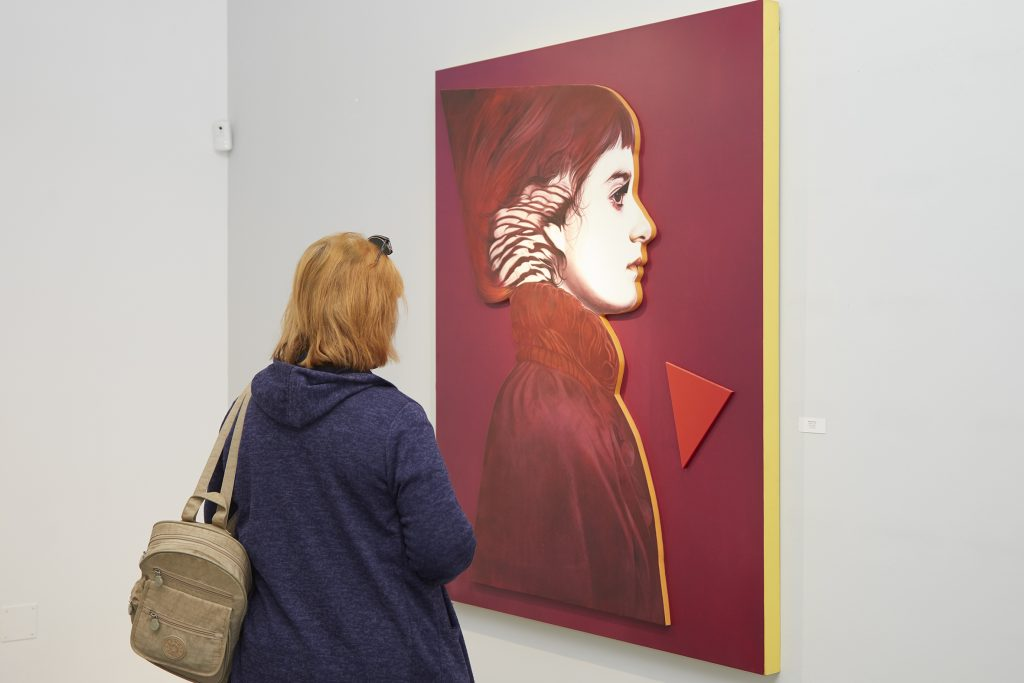
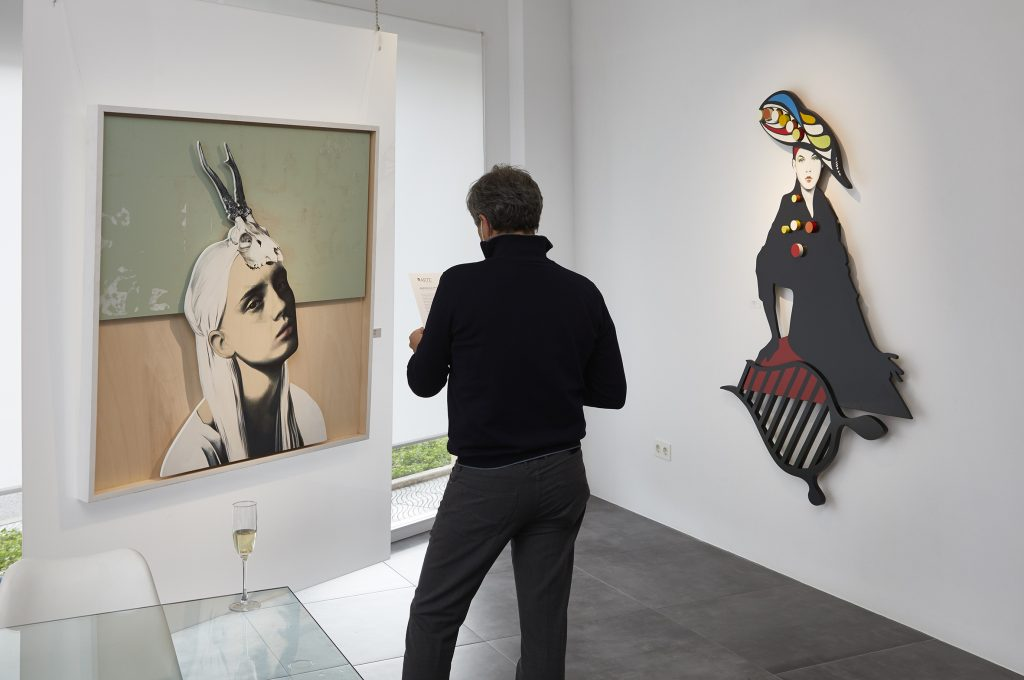
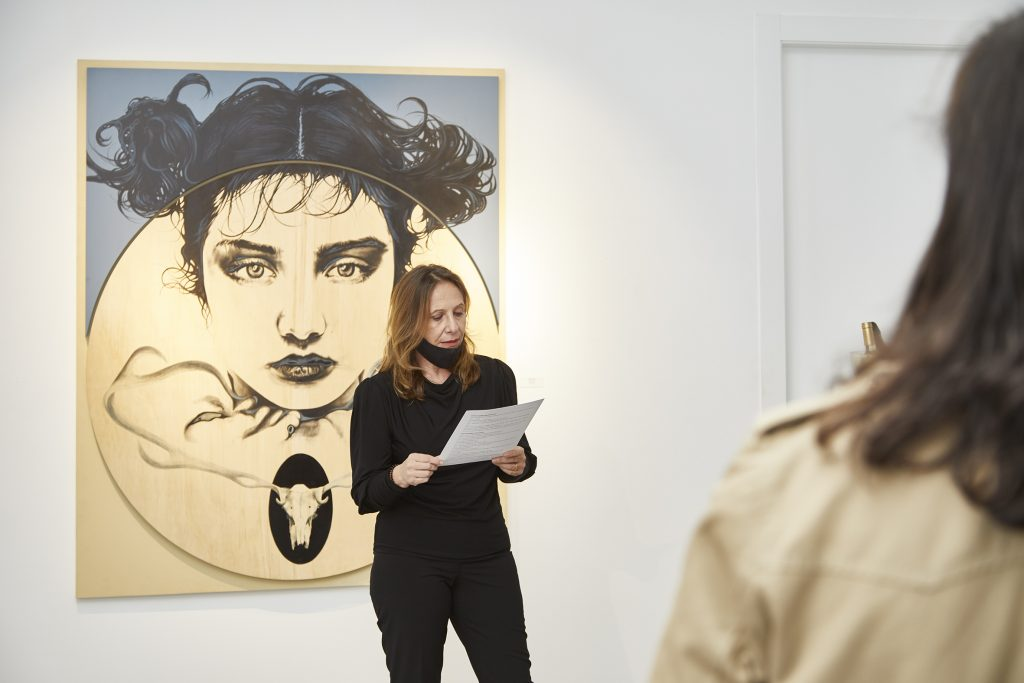
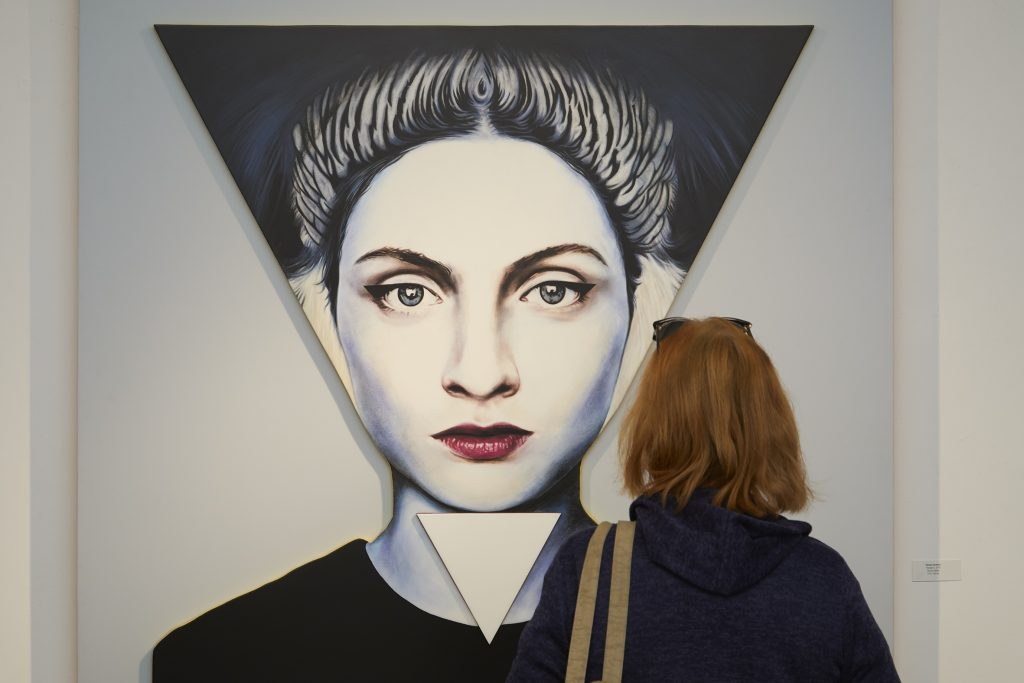
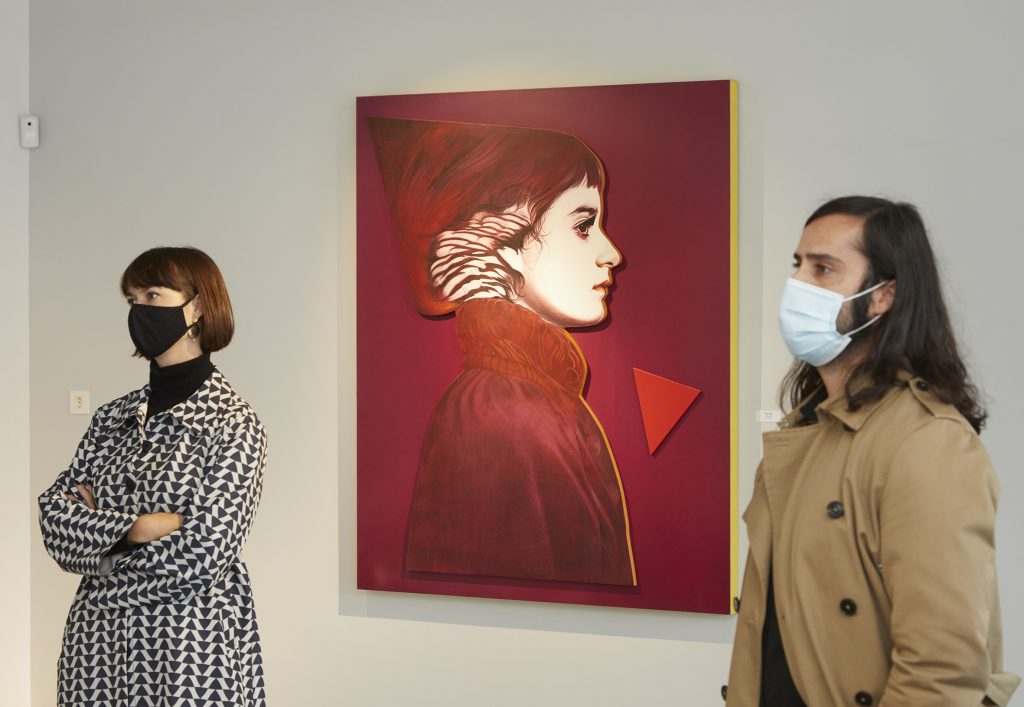
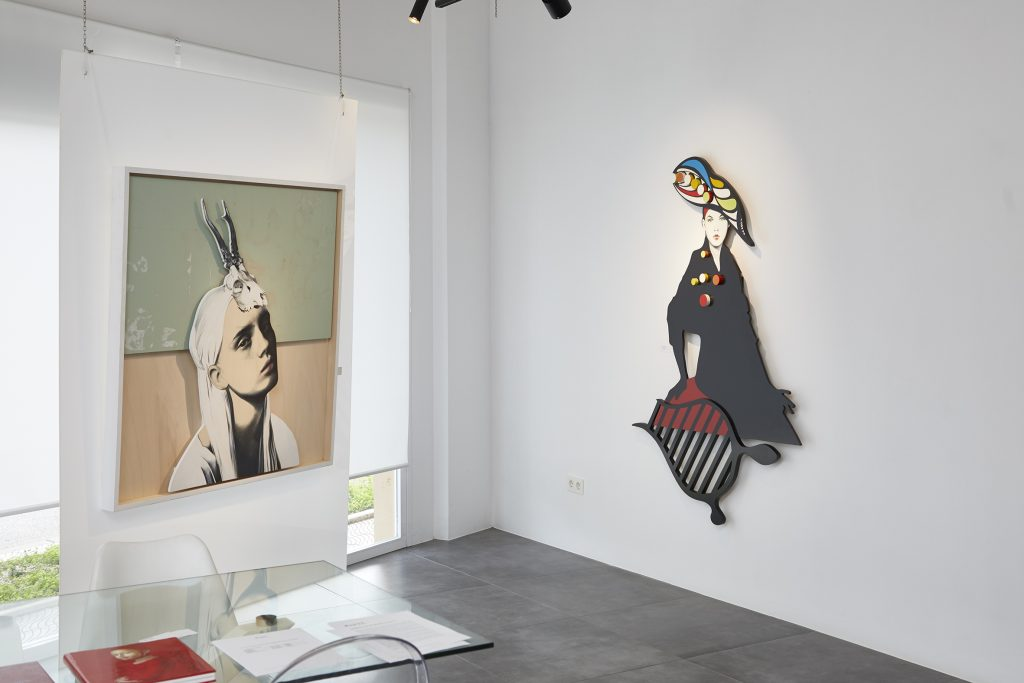
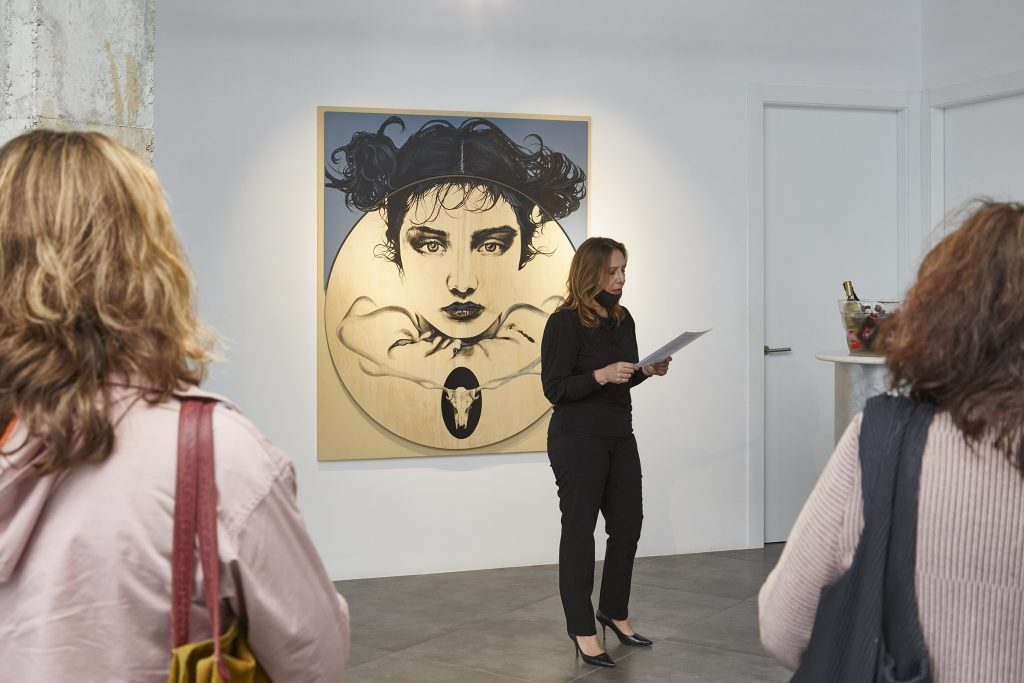
Stratigraphic revelation of emerging ideas — Feminism and identity underlie the distinctly feminine work of Teresa Carneiro (Portugal, 1977). Behind her melancholic images, there is a latent driving force that invites awareness of how contemporary women live and present themselves — in developed societies — empowered across the different spheres in which they operate, materializing each of their facets in a particular effigy that acts as a symbol or analogy.
Following this predominant definition, a historical anecdote comes to mind, obiter dictum, surrounding Matisse when, in 1905, he presented — to the astonishment of many — the wonderful work Woman with a Hat, a portrait of Amalie Matisse, a strong and determined woman who worked as a milliner to support her family before glory reached the brilliant painter.
Without the sitter’s own physiognomy being decisive in the conception of the work, and following a recommendation by Mallarmé, Matisse painted his wife under her emblem of triumph — essentially granting painting a transformative capacity through critical reasoning. Something similar occurs in this artist’s work.
The metaphorical connotations that Carneiro grants to each of her creations require the engagement of our intellectual faculties in order to exert a notable influence. She gives them an external perfection that strips the work of metaphysical character, which is interesting because of the overwhelming reality it represents: women looking at women.
Through her work, Carneiro employs an immeasurably beautiful figuration that highlights individual issues through imaginary portraits whose deep gaze challenges the viewer to immerse themselves in the subject’s psyche and empathize with the image beyond what is seen. She achieves this through extraordinary mastery of drawing and color, applied on die-cut wood.
And sometimes, we do not need encrypted imagery to reveal profound content that speaks about the needs women still demand today. Emotional figuration is destined to carry social and political potential in postmodernity — the era in which a fourth wave of feminism, beginning in the second decade of the 21st century, remains in force. This is the era in which we live.
Patricia Bueno del Río