
LA FIGURACIÓN EN ÉPOCA DE TRANSICIÓN
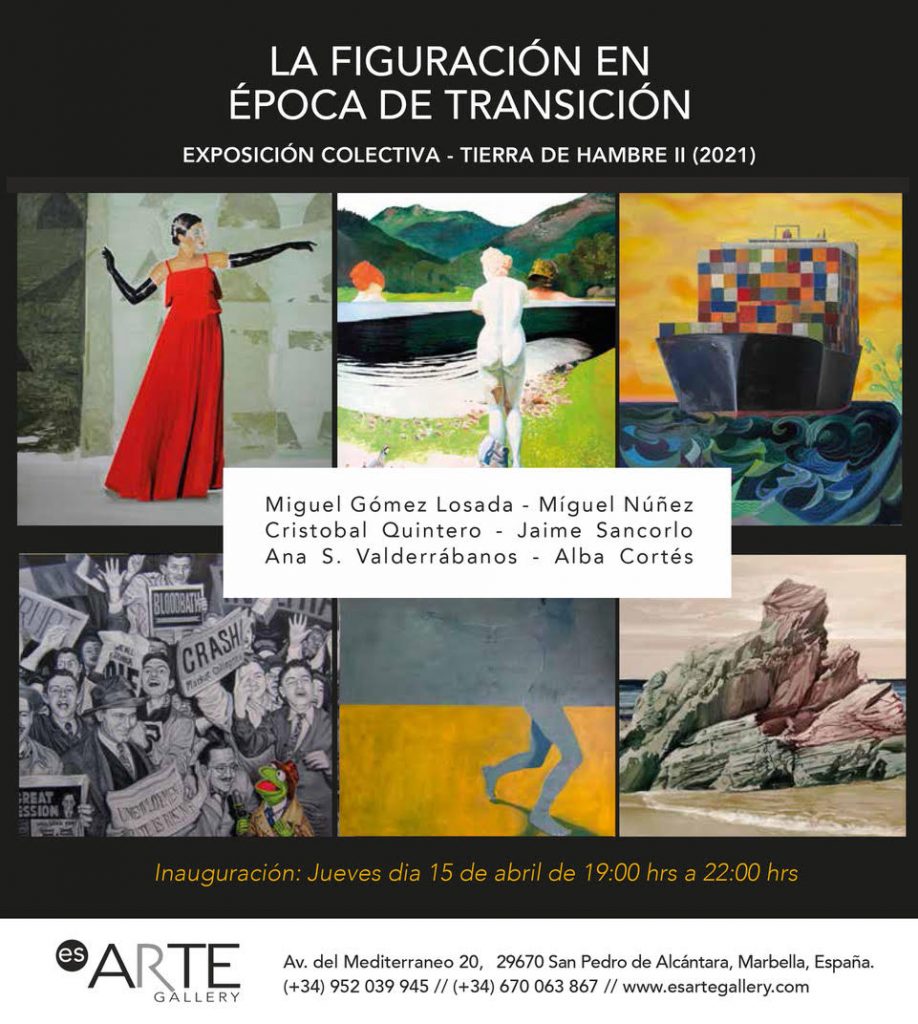
[vc_row][vc_column][vc_column_text] TIERRA DE HAMBRE II – LA FIGURACIÓN EN ÉPOCA DE TRANSICIÓN Es.Arte Gallery, presenta la exposición Tierra de Hambre: La figuración en tiempos de transición, la tercera edición de la colectiva anual que desde 2018 lleva a cabo la galería con un objetivo social: La lucha por la concienciación. (Tierra de Hambre y Be woman & Smile). La propuesta, resultado de una convocatoria previa, apuesta por vincular la plástica al mensaje y cuenta con la participación de seis artistas, con cuya obra se llevará a cabo un acercamiento al pensamiento actual. En esta ocasión, y dada la calidad de las propuestas, la exposición Tierra de hambre se dividirá en dos etapas, la primera de ellas, con subtitulo La figuración en tiempos de transición, que se inaugura el 15 de abril, y La abstracción en tiempos de transición, pendiente de definir fecha.[/vc_column_text][vc_empty_space][/vc_column][/vc_row][vc_row][vc_column width=”1/3″][vc_single_image image=”14049″ img_size=”medium” alignment=”center”][vc_btn title=”MIGUEL GÓMEZ LOSADA” shape=”square” size=”sm” align=”center” button_block=”true” link=”url:https%3A%2F%2Fesartegallery.com%2Fmiguel-gomez-losada|title:Miguel%20G%C3%B3mez%20Losada|target:%20_blank|”][/vc_column][vc_column width=”1/3″][vc_single_image image=”14051″ img_size=”medium” alignment=”center”][vc_btn title=”MIGUEL NÚÑEZ” shape=”square” size=”sm” align=”center” button_block=”true” link=”url:https%3A%2F%2Fesartegallery.com%2Fmiguel-nunez|title:Miguel%20N%C3%BA%C3%B1ez|target:%20_blank|”][/vc_column][vc_column width=”1/3″][vc_single_image image=”14053″ img_size=”medium” alignment=”center”][vc_btn title=”CRISTÓBAL QUINTERO” shape=”square” size=”sm” align=”center” button_block=”true”][/vc_column][/vc_row][vc_row][vc_column width=”1/3″][vc_single_image image=”14055″ img_size=”medium” alignment=”center”][vc_btn title=”ALBA CORTÉS” shape=”square” size=”sm” align=”center” button_block=”true” link=”url:https%3A%2F%2Fesartegallery.com%2Falba-cortes|title:Alba%20Cort%C3%A9s|target:%20_blank|”][/vc_column][vc_column width=”1/3″][vc_single_image image=”14057″ img_size=”medium” alignment=”center”][vc_btn title=”JAIME SANCORLO” shape=”square” size=”sm” align=”center” button_block=”true” link=”url:https%3A%2F%2Fesartegallery.com%2Fjaime-sancorlo|title:Jaime%20Sancorlo|target:%20_blank|”][/vc_column][vc_column width=”1/3″][vc_single_image image=”13995″ img_size=”medium” alignment=”center”][vc_btn title=”ANA VALDERRÁBANOS” shape=”square” size=”sm” align=”center” button_block=”true” link=”url:https%3A%2F%2Fesartegallery.com%2Fana-sanchez-valderrabanos|title:Ana%20S%C3%A1nchez%20Valderr%C3%A1banos|target:%20_blank|”][/vc_column][/vc_row][vc_row][vc_column][vc_column_text][/vc_column_text][vc_empty_space][vc_column_text] LOS BUSCADORES DE BELLEZA TEXTO CRÍTICO: Patricia Bueno del Río En el último año, la humanidad se ha visto abocada a cuestionar los relatos hegemónicos que envuelven la complejidad que de antemano va adscrita a un proceso de transición como el que estamos atravesando. Así pues, resulta necesario reflexionar sobre las estrategias ajenas con cierta resistencia y contestación, algo que siempre ha perseguido el arte: pensamiento crítico y reflejo estético para dar respuestas. En la naturaleza de un proceso de cambio, se produce un detonante que paraliza, y por tanto, provoca una paulatina desactivación temporal de las prácticas artísticas. Al tomar consciencia, se reactiva la actividad, y se renueva el pensamiento creativo, a menudo, trastocado por la nueva realidad que acontece. Los autores que esta muestra reúnen son, de alguna manera, buscadores de la respuesta a través de la belleza; contrarios, de algún modo al dogma de Danto que consideraba la belleza como una visión atrasada del arte. En la obra de cada uno de los autores, hay metafísica, valor introspectivo y panorámica exterior, pero sin duda, las distintas perspectivas que ofrecen se acercan a la filosofía kantiana que define la belleza como el libre juego de las facultades humanas, de la sensibilidad y el entendimiento. Miguel Losada y Miguel Núñez, lo hacen desde una poética exquisita con la que que reflejan un modo afectivo de recrear la imagen. El primero, representando la exaltación de lo grácil a través de la postura, la porte y el boato con que dota a las figuras humanas que representa; el segundo, transfigurando espacios en los que la presencia del ser humano se reduce a la reproducción majestuosa de la misma a través de la escultura. Cristóbal Quintero, con ironía, a través de escenas llenas de carga simbólica en las que la plástica y el lenguaje se enlazan para conseguir una imagen simbólica cargada de fuerza, humor y sentido. Alba Cortés, por su parte, se acerca a la belleza con la representación rotunda de un paisaje montañoso al que dota de sutiles matices, apelando a lo sublime desde un punto de vista muy afín al Romanticismo; Ana S. Valderrábanos, desde la reducción de la imagen a planos de una suave monocromía que dota de luz a la representación de dulces y optimistas escenas de la infancia, y Jaime Sancorlo, con una obra cargada de contenido, que invita a centrarse en lo minucioso de los detalles, y una marcada ironía que conecta frontalmente con el espectador. De este modo, el mensaje de cada creador va adscrito a su lenguaje, y subyace incluso, a su particular manera de entender el mundo, asumir sus cambios y adaptarse a ellos. Esto es lo que prevalece: la búsqueda de la verdad y su implícita manera de conceptualizar mediante la visión subjetiva. La estética es inevitablemente útil para ser contestatario. Lo bello es ahora necesariamente libre y desinteresado, por tanto, más rico, necesario y trascendental.[/vc_column_text][vc_empty_space][vc_media_grid grid_id=”vc_gid:1619269694768-3c955f96-ad70-4″ include=”14237,14239,14241,14245,14249,14251,14253,14257,14265″][/vc_column][/vc_row]
FIGURATION IN TMES OF TRANSITION
[vc_row][vc_column][vc_column_text] EARTH HUNGER II – FIGURATION IN TIMES OF TRANSITION Es.Arte Gallery, presenta la exposición Tierra de Hambre: La figuración en tiempos de transición, la tercera edición de la colectiva anual que desde 2018 lleva a cabo la galería con un objetivo social: La lucha por la concienciación. (Tierra de Hambre y Be woman & Smile). La propuesta, resultado de una convocatoria previa, apuesta por vincular la plástica al mensaje y cuenta con la participación de seis artistas, con cuya obra se llevará a cabo un acercamiento al pensamiento actual. En esta ocasión, y dada la calidad de las propuestas, la exposición Tierra de hambre se dividirá en dos etapas, la primera de ellas, con subtitulo La figuración en tiempos de transición, que se inaugura el 15 de abril, y La abstracción en tiempos de transición, pendiente de definir fecha.[/vc_column_text][vc_empty_space][/vc_column][/vc_row][vc_row][vc_column width=”1/3″][vc_single_image image=”14050″ img_size=”medium” alignment=”center”][vc_btn title=”MIGUEL GÓMEZ LOSADA” shape=”square” size=”sm” align=”center” button_block=”true” link=”url:https%3A%2F%2Fesartegallery.com%2Fen%2Fartists%2Fmiguel-gomez-losada|title:Miguel%20G%C3%B3mez%20Losada|target:%20_blank|”][/vc_column][vc_column width=”1/3″][vc_single_image image=”14052″ img_size=”medium” alignment=”center”][vc_btn title=”MIGUEL NÚÑEZ” shape=”square” size=”sm” align=”center” button_block=”true” link=”url:https%3A%2F%2Fesartegallery.com%2Fen%2Fartists%2Fmiguel-nunez|title:Miguel%20N%C3%BA%C3%B1ez|target:%20_blank|”][/vc_column][vc_column width=”1/3″][vc_single_image image=”14054″ img_size=”medium” alignment=”center”][vc_btn title=”CRISTÓBAL QUINTERO” shape=”square” size=”sm” align=”center” button_block=”true”][/vc_column][/vc_row][vc_row][vc_column width=”1/3″][vc_single_image image=”14056″ img_size=”medium” alignment=”center”][vc_btn title=”ALBA CORTÉS” shape=”square” size=”sm” align=”center” button_block=”true” link=”url:https%3A%2F%2Fesartegallery.com%2Fen%2Fartists%2Falba-cortes|title:Alba%20Cort%C3%A9s|target:%20_blank|”][/vc_column][vc_column width=”1/3″][vc_single_image image=”14058″ img_size=”medium” alignment=”center”][vc_btn title=”JAIME SANCORLO” shape=”square” size=”sm” align=”center” button_block=”true” link=”url:https%3A%2F%2Fesartegallery.com%2Fen%2Fartists%2Fjaime-sancorlo|title:Jaime%20Sancorlo|target:%20_blank|”][/vc_column][vc_column width=”1/3″][vc_single_image image=”13996″ img_size=”medium” alignment=”center”][vc_btn title=”ANA VALDERRÁBANOS” shape=”square” size=”sm” align=”center” button_block=”true” link=”url:https%3A%2F%2Fesartegallery.com%2Fen%2Fana-sanchez-valderrabanos|title:Ana%20S%C3%A1nchez%20Valderr%C3%A1banos|target:%20_blank|”][/vc_column][/vc_row][vc_row][vc_column][vc_column_text][/vc_column_text][vc_empty_space][vc_column_text] THE BEAUTY SEEKERS CRITICAL TEXT: Patricia Bueno del Río In the last year, humanity has been forced to question the hegemonic narratives that envelop the complexity that is ascribed to a process of transition such as the one we are going through. It is therefore necessary to reflect on the strategies of others with a certain resistance and contestation, something that art has always pursued: critical thought and aesthetic reflection in order to provide answers. In the nature of a process of change, there is a trigger that paralyses, and therefore causes a gradual temporary deactivation of artistic practices. On becoming aware of this, activity is reactivated and creative thought is renewed, often disrupted by the new reality that occurs. The authors that this exhibition brings together are, in a way, seekers of the answer through beauty; contrary, in a way, to Danto’s dogma that considered beauty as a backward vision of art. In the work of each of the authors, there is metaphysics, introspective value and external panorama, but without a doubt, the different perspectives they offer are close to the Kantian philosophy that defines beauty as the free play of the human faculties, of sensitivity and understanding. Miguel Losada and Miguel Núñez do so from an exquisite poetics with which they reflect an affective way of recreating the image. The former, representing the exaltation of the graceful through the posture, the bearing and the pomp with which he endows the human figures he represents; the latter, transfiguring spaces in which the presence of the human being is reduced to the majestic reproduction of the same through sculpture. Cristóbal Quintero, with irony, through scenes full of symbolic charge in which plastic art and language are linked to achieve a symbolic image full of strength, humour and meaning. Alba Cortés, for her part, approaches beauty with the emphatic representation of a mountainous landscape which she endows with subtle nuances, appealing to the sublime from a point of view that is very similar to Romanticism; Ana S. Valderrábanos, from the reduction of the image to planes of a soft monochrome that gives light to the representation of sweet and optimistic scenes of childhood, and Jaime Sancorlo, with a work full of content, which invites us to focus on the minuteness of the details, and a marked irony that connects head-on with the viewer. In this way, the message of each creator is ascribed to his language, and even underlies his particular way of understanding the world, assuming its changes and adapting to them. This is what prevails: the search for truth and its implicit way of conceptualising through subjective vision. Aesthetics is inevitably useful for being contentious. The beautiful is now necessarily free and disinterested, therefore richer, more necessary and transcendental.[/vc_column_text][vc_empty_space][vc_media_grid grid_id=”vc_gid:1619269694768-3c955f96-ad70-4″ include=”14238,14240,14242,14246,14250,14252,14254,14258,14266″][/vc_column][/vc_row]