
Exposición N-340 Dirección Suroeste

10 NOV 2022 Ver Catálogo de Exposición: Ver más Otras Exposiciones N-340 Dirección Suroeste EXPOSICIÓN COLECTIVA: CHANIVET, PABLO F-PUJOL, YEYO ARGÜEZ Si cercanias o distancias se miden con relación al tiempo, en este instante, y partiendo del concepto de conexión de la nacional 340, arteria principal que unía las provincias de Cádiz y Málaga, hemos acercado a tres autores gaditanos desde el km 0 (Cádiz) a Marbella en Es arte Gallery con discursos dispares pero unidos en paralelo por el origen y época.La obra de Chanivet descontextualiza el tiempo y los objetos aparentemente inconexos que retrata, pero que conllevan una intencionalidad elocuente a través de un despliegue de formas. Explora el carácter cambiante y no permanente de las cosas, reconstruyendo una realidad desordenada que camina formalmente hacia la abstracción. Yeyo Argüez utiliza los Elementos como el fuego, el aire, el agua o el propio elemento humano desde una perspectiva antropológica, como puntos de partida para generar su obra, que se materializa desde la pintura a la escultura, pasando por el dibujo, la instalación o el formato videográfico.En esta ocasión encontramos la unidad de una imagen de tendencia metafísica, mostrando una doble visión creadas por fragmentos circulares, formando una vibración visual de diferentes atmosferas creando diferentes realidades de una misma imagen. Por otro lado, las obras seleccionadas por Pablo Fernández-Pujol para el proyecto N-340, se enmarcan dentro de su línea de trabajo sobre los campos de color. La primera, “Paisajes confinados”, realizada durante la pandemia, presenta una pintura volumétrica compuesta por 5 paisajes pintados sobre lienzos solapados, que aluden a los momentos de reclusión impuestos por las “circunstancias”. La segunda obra, “Dark sun”, es un escena nocturna del rio Sena en Paris, un paisaje en movimiento que surge de uno de los primeros viajes post-pandémicos. Como decía M. Arcenegui, “la pintura no es representación sino acontecimiento personal”. Con esta propuesta, plantea desde la metáfora artística su visión vital sobre el encierro y la libertad. Compartir: Facebook WhatsApp X Threads
Solo Exhibition: Birds in my head
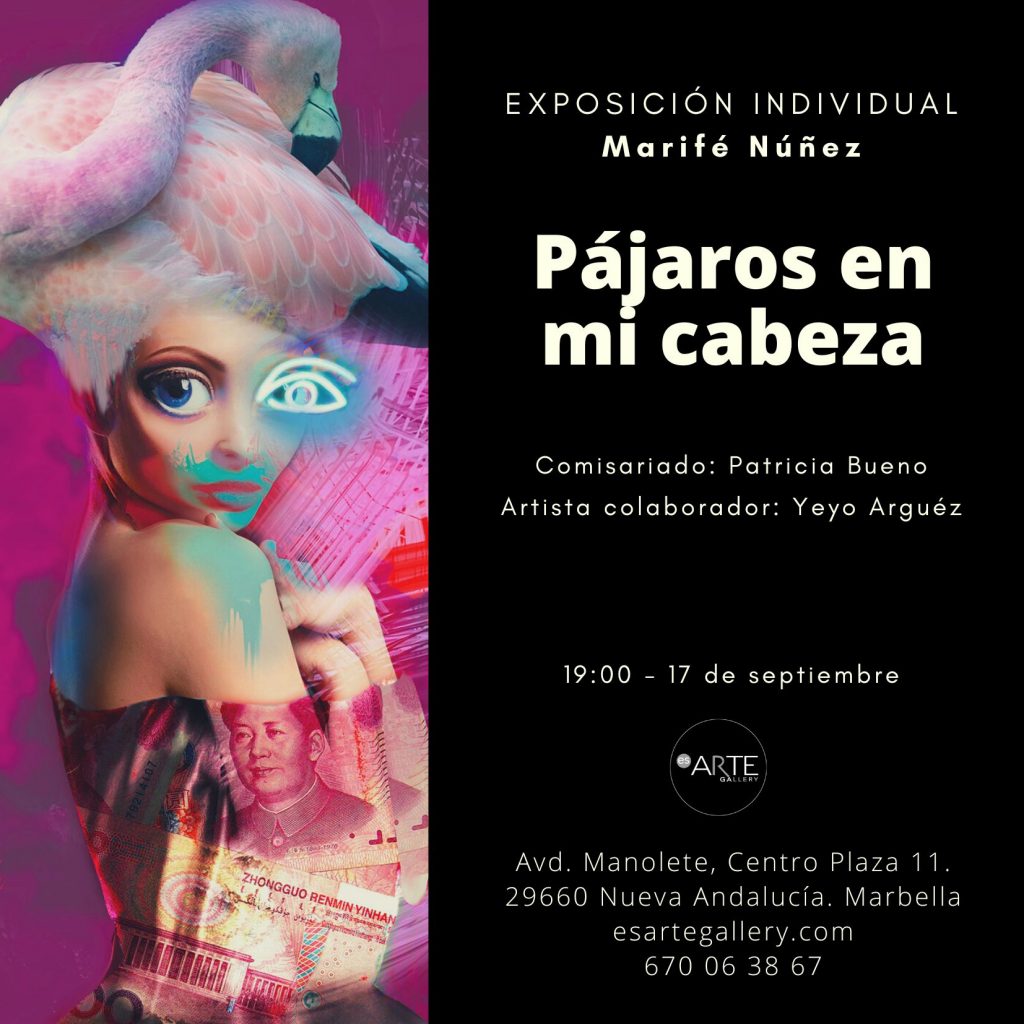
[vc_row][vc_column width=”1/3″][vc_single_image image=”18504″ img_size=”medium” alignment=”center” css_animation=”bounceInLeft”][/vc_column][vc_column width=”1/3″][vc_single_image image=”18506″ img_size=”medium” alignment=”center” css_animation=”bounceInLeft”][/vc_column][vc_column width=”1/3″][vc_single_image image=”18508″ img_size=”medium” alignment=”center” css_animation=”bounceInLeft”][/vc_column][/vc_row][vc_row][vc_column][vc_empty_space height=”24px”][vc_btn title=”Marifé Núñez” style=”classic” shape=”square” color=”black” size=”lg” align=”center” css_animation=”bounceInLeft” link=”url:https%3A%2F%2Fesartegallery.com%2Fartistas%2Fmarife-nunez|||”][vc_empty_space height=”24px”][/vc_column][/vc_row][vc_row][vc_column][vc_column_text] BIRDS IN MY HEAD SOLO EXHIBITION : MARIFÉ NÚÑEZ Critic Text: Patricia Bueno The idea of this project revolves around an introspective and sensitive, intimate fiction that explores the evolution of the stages of a woman’s life from a modern perspective, with the idea of female empowerment in the search for gender equality at its core. The exhibition is conceived as a personal reflection of the artist herself, a projection of the psyche of today’s woman, crystallising desires, wishes and goals common to all, which she deals with in a metaphorical way, while denoting a show of affection for what she has already achieved from her vital perspective, all from aesthetic criteria, with a broad coherence and an absolutely contemporary sense of beauty which in turn respects the classical artistic canons. In its configuration, the work of Marifé Nuñez reflects the hegemony of the self, a compendium of visions in which critical thought and sudden idea are combined in a way that gives power to the voice of the human subconscious as a focus of wills, and leads to a common message about the evolution of the prototype of the current woman of our context, with which the author identifies herself: determined and curious and active. Visually, the exhibition consists of two installation pieces, a video-creation and a series of two-dimensional portraits (titled with the phrase that gives the project its name) made with mixed media. This series consists of female images enveloped in an acid and chimerical spectral halo that contains a great symbolic charge. The different birds that crown the women she portrays are symbols of facets that the artist wants to highlight. Strength, freedom or money, beauty, creativity or success, among others, are concepts that have been associated throughout history with the peacock, the hen or the flamingo. On the other hand, the large neon eye in these images reinforces this idea and takes it to a more transcendental, mystical level, alluding to the evolution of the human being to something superior, almost transhuman, which reinforces the link with the spectator and brings the image to life, as if in some way this effigy had the capacity to observe the observer. The protagonists of these images have a certain regal air as if they were Zurbarán’s “portrait of the divine”. They are normal women with attributes that lead them to become an exalted version of themselves. This series, of great presence in the exhibition, is undoubtedly a desire for survival and reaffirmation which is made manifest through the use of the portrait as an emblem of power charged with intention, as “they represent, in some way, warrior women, Napoleonic, of the period, with bearing and symbolism”, in the words of the author herself, but she does so by taking it to her own terrain. Plastically, this series is resolved by means of different languages. The use of photography, collage, painting or the installation of light manages to revise the genre in a brave way. A direct and reflexive art full of honesty and strength, which gives great importance to atmospheres, electrifying and artificial, fictitious, that recreate a dreamed, desirable and utopian world to inhabit today, between poetry and illusion. Curated by Patricia Bueno. Artista colaborador: Yeyo Arguéz[/vc_column_text][vc_empty_space height=”24px”][vc_btn title=”DOWNLOAD EXHIBITION CATALOGUE” style=”classic” shape=”square” color=”black” size=”lg” align=”center” css_animation=”bounceInLeft” link=”url:https%3A%2F%2Fesartegallery.com%2Fwp-content%2Fuploads%2F2022%2F09%2FArt-Exhibition-Pajaros-en-mi-cabeza.pdf|||”][vc_empty_space height=”24px”][/vc_column][/vc_row]
DES – SOCIALIZACIÓN

[vc_row][vc_column width=”1/3″][vc_single_image image=”12302″ alignment=”center”][vc_btn title=”JUAN NARANJO” style=”outline” shape=”square” color=”black” size=”sm” align=”center” button_block=”true” link=”url:https%3A%2F%2Fesartegallery.com%2Fartistas%2F12292-2|title:Juan%20Naranjo||”][/vc_column][vc_column width=”1/3″][vc_single_image image=”13291″ alignment=”center”][vc_btn title=”PACO SANGUINO” style=”outline” shape=”square” color=”black” size=”sm” align=”center” button_block=”true” link=”url:https%3A%2F%2Fesartegallery.com%2Fartistas%2Fpaco-sanguino|title:Paco%20Sanguino||”][/vc_column][vc_column width=”1/3″][vc_single_image image=”13281″ alignment=”center”][vc_btn title=”RICHARD WESTERHUIS” style=”outline” shape=”square” color=”black” size=”sm” align=”center” button_block=”true” link=”url:https%3A%2F%2Fesartegallery.com%2Fen-venta%2Ffotografias%2Fthrough-the-second-skin|title:Through%20the%20second%20skin%20%E2%80%93%20Richard%20Westerhuis||”][/vc_column][/vc_row][vc_row][vc_column][vc_empty_space height=”20px”][vc_column_text] DES-SOCIALIZACIÓN Es arte gallery les invita a reflexionar sobre las distintas cuestiones que derivan de la realidad que nos acontece, a través de la mirada de tres artistas: Richard Westerhuis, Juan Naranjo, Paco Sanguino Texto: Patricia Bueno Desde el 4 de Marzo al 30 de Marzo [/vc_column_text][vc_empty_space][vc_column_text]Desde hace más de una década, la des-socialización se considera uno de los grandes problemas de nuestro tiempo, a pesar de que, en el último año, qué duda cabe, ha alcanzado su punto álgido. La falta de interés por la relación directa del ser humano para con sus congéneres, conlleva un proceso introspectivo por el cual una persona experimenta el detrimento de su papel en la sociedad y, por tanto, un menoscabo de poder y prestigio, que deriva, de forma inevitable, en un trastorno de pérdida de identidad social y una crisis de autoestima. Pero bajo la guinda del pastel – de un año de aislamiento imperante -, subyace una realidad que no viene dada por una imposición histórica cíclica, sino por una cuestión antropológica que tiene su origen en la difusión de ideas y de modelos de ser humano que son, eminentemente, falaces. El historiador Matthew Fforde afirma que lo que caracteriza a la sociedad posmoderna es la pérdida de vínculos, un mal que a menudo intentamos paliar mediante la tecnología social, una mejora insuficiente de la que nos previno Simone de Beauvoir cuando sentenció que “el teléfono no acorta las distancias, tan solo las confirma”. Esto conlleva a otra problemática cotidiana que engrosa el efecto dominó del sujeto: el ego y un narcicismo sin límites. Pero este mal, tiene contraprestaciones: una vez extirpada base social de la interacción personal, superar el miedo a la soledad, plaga y quintaesencia de la condición contemporánea, es un camino unidireccional e irremediable. La obra de los tres artistas que componen esta muestra nos hace reflexionar sobre las distintas cuestiones que derivan de esta realidad. Así, se nos plantean ideas como la pérdida de vínculos, que se pone de manifiesto frontalmente a través del proyecto “Through the second skin” del artista Richard Westerhuis. Sus fotografías connotan reminiscencias de tenebrismo a través del magistral uso de la luz, prefigurando un cierto aire zurbaranesco que se pone de manifiesto en la representación de lo frugal, la precisión, la austeridad y la crudeza del silencio a través de la plástica. Entre los mensajes, también se muestra la visión relativista de un estilo de vida individualista que provoca una ruptura en la comunidad, presente en los retratos burbuja de Juan Naranjo, “Isolated”, pintura realizada con una maestría impecable a la vez que una gran modernidad; y así, también podemos percibir ideas como el hastío, materializado por la pintura de Paco Sanguino, en la que están latente temas como la decadencia de la familia, el sufrimiento juvenil, el vaciamiento y la pérdida de confianza a través de una pintura fresca y suelta, que denota su control técnico sobre la forma a la hora de resolver el detalle de las imágenes que construye. Con estas obras, ponemos de manifiesto que somos una sociedad que corre el peligro de perder su sentido de la responsabilidad personal y social, el sentido de decadencia común e incluso la moralidad públicos. La tendencia a la des socializar del hombre contemporáneo y los mecanismos que actúan como palancas para separar a las personas, han impuesto de forma sistemática la pérdida de vínculos, y está realidad, agudizada por la situación actual, es una de las consecuencias de una crisis epocal sin precedentes, en la que la situación anímica de las personas se convierte en el marco de referencia y perfil de la situación misma. La desintegración personal se da en un contexto de desintegración social, y esto supondrá, como podemos vislumbrar, la transformación de los grupos humanos. Patricia Bueno del Río[/vc_column_text][vc_empty_space][vc_single_image image=”13336″ img_size=”medium” alignment=”center”][vc_empty_space height=”20px”][/vc_column][/vc_row]
DES – SOCIALISATION
[vc_row][vc_column width=”1/3″][vc_single_image image=”12303″ alignment=”center”][vc_btn title=”JUAN NARANJO” style=”outline” shape=”square” color=”black” size=”sm” align=”center” button_block=”true” link=”url:https%3A%2F%2Fesartegallery.com%2Fen%2Fartists%2F12292-2|title:Juan%20Naranjo|”][/vc_column][vc_column width=”1/3″][vc_single_image image=”13292″ alignment=”center”][vc_btn title=”PACO SANGUINO” style=”outline” shape=”square” color=”black” size=”sm” align=”center” button_block=”true” link=”url:https%3A%2F%2Fesartegallery.com%2Fen%2Fartists%2Fpaco-sanguino%2Fpaco-sanguino-2|title:Paco%20Sanguino|”][/vc_column][vc_column width=”1/3″][vc_single_image image=”13282″ alignment=”center”][vc_btn title=”RICHARD WESTERHUIS” style=”outline” shape=”square” color=”black” size=”sm” align=”center” button_block=”true” link=”url:https%3A%2F%2Fesartegallery.com%2Fen%2Ffor-sale%2Fphotographs%2Fthrough-the-second-skin|title:Through%20the%20second%20skin%20%E2%80%93%20Richard%20Westerhuis|”][/vc_column][/vc_row][vc_row][vc_column][vc_empty_space height=”20px”][vc_column_text] DES-SOCIALISATION Es arte gallery invites you to reflect on the different questions arising from the reality that befalls us through the eyes of three artists: Richard Westerhuis, Juan Naranjo, Paco Sanguino From 4 March to 30 de March [/vc_column_text][vc_empty_space][vc_column_text]For more than a decade, de-socialisation has been considered one of the great problems of our time, although it has certainly reached its peak in the last year. The lack of interest in the direct relationship of human beings with their fellow human beings leads to an introspective process by which a person experiences the detriment of his or her role in society and, therefore, a loss of power and prestige, which inevitably results in a loss of social identity and a crisis of self-esteem. But beneath the icing on the cake – of a year of prevailing isolation – lies a reality that is not a cyclical historical imposition, but an anthropological issue rooted in the dissemination of ideas and models of being human that are eminently fallacious. Historian Matthew Fforde argues that what characterises post-modern society is the loss of bonds, an evil that we often try to alleviate through social technology, an insufficient improvement of which Simone de Beauvoir warned us when she said that “the telephone does not shorten distances, it only confirms them”. This leads to another daily problem that increases the domino effect of the subject: the ego and narcissism without limits. But this evil, however, has its own counter-performance: once the social basis of personal interaction has been removed, overcoming the fear of loneliness, the plague and quintessence of the contemporary condition, is a one-way and irremediable path. The work of the three artists in this exhibition makes us reflect on the different questions that derive from this reality. Thus, we are presented with ideas such as the loss of links, which is revealed head-on through the project “Through the second skin” by the artist Richard Westerhuis. His photographs connote reminiscences of tenebrism through the masterful use of light, prefiguring a certain Zurbaran air that is manifested in the representation of frugality, precision, austerity and the rawness of silence through plastic art. Among the messages, we can also see the relativistic vision of an individualistic lifestyle that causes a rupture in the community, present in the bubble portraits of Juan Naranjo, “Isolated”, a painting carried out with impeccable mastery and great modernity; and we can also perceive ideas such as boredom, materialised in the painting of Paco Sanguino, in which themes such as the decadence of the family, youthful suffering, emptiness and loss of confidence are latent through a fresh and loose painting, which denotes his technical control over the form when resolving the detail of the images he constructs. With these works, we show that we are a society in danger of losing its sense of personal and social responsibility, the sense of common decadence and even public morality. The tendency of contemporary man to unsocialise and the mechanisms that act as levers to separate people have systematically imposed the loss of bonds, and this reality, made more acute by the current situation, is one of the consequences of an unprecedented epochal crisis, in which people’s state of mind becomes the frame of reference and profile of the situation itself. Personal disintegration is taking place in a context of social disintegration, and this will entail, as we can glimpse, the transformation of human groups. Patricia Bueno del Río[/vc_column_text][vc_empty_space][vc_single_image image=”13337″ img_size=”medium” alignment=”center”][vc_empty_space height=”20px”][/vc_column][/vc_row]
Entrevista a la Artista Marifé Núñez, Sara Sanz Aldea (The Biombo)
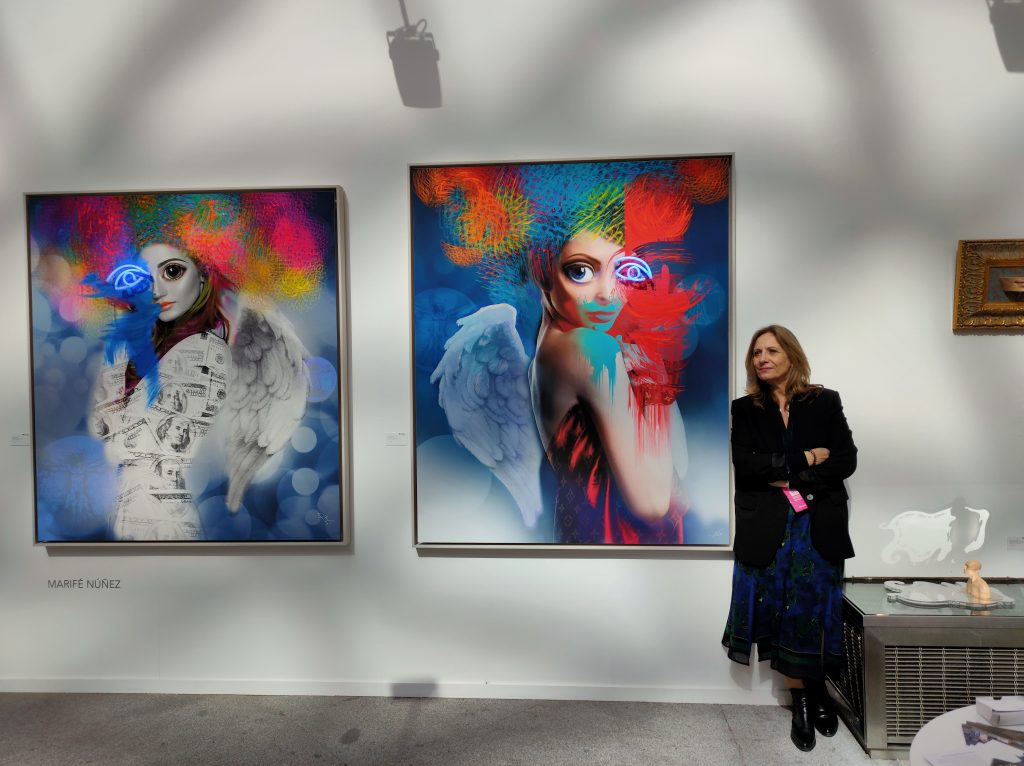
[vc_row][vc_column][vc_single_image image=”9107″ img_size=”full” alignment=”center”][vc_empty_space height=”30px”][vc_column_text]Estamos encantados de poder compartir con nuestros lectores, este post realizado por la bloguera Sara Sanz Aldea en su blog de arte The Biombo donde busca promocionar y dar a conocer la gran calidad artística que podemos encontrar en España en cuanto a obras, galerías y artistas. En el siguiente post lleva a cabo una peuqeña entrevista con la artista cordobesa Marifé Núñez, analizando los motivos de su comienzo y pasión por el mundo del arte para profundizar en su apuesta por las obas que buscan realzar el empoderamiento de la mujer y el valor de la espiritualidad. Marifé Núñez es una artista con una gran sensibilidad por la igualdad de género y por la puesta en valor de la espiritualidad. En su entrevista para The Biombo hace al espectador parte activa, para que con la ayuda del arte, su alma fluya sin límites tras una profunda búsqueda interior. 1.- ¿Cuándo surge tu pasión por el Arte? La pasión por el arte siempre estuvo presente desde pequeña. Aunque era muy difícil que mis padres entendieran que quería ser artista, aparte que ni siquiera me atreví a proponerlo. Fue un verano que casualmente empecé a trabajar como ayudante de diseño en una revista y me pidieron hacer una ilustración, desde ese momento las hacía todas. Ese día sentí que existía una manera de ser creativo y ser comercial a la vez.[/vc_column_text][vc_empty_space height=”30px”][vc_btn title=”SEGUIR LEYENDO” style=”outline” shape=”square” color=”turquoise” size=”lg” align=”center” button_block=”true” link=”url:https%3A%2F%2Fsarasanzaldea.com%2Fentrevista-a-marife-nunez%2F||target:%20_blank|”][/vc_column][/vc_row]
Interview to the Artist Marifé Núñez, Sara Sanz Aldea (The Biombo)
[vc_row][vc_column][vc_single_image image=”9108″ img_size=”full” alignment=”center”][vc_empty_space height=”30px”][vc_column_text]We are pleased to share with our readers, this post made by the blogger Sara Sanz Aldea in her art blog The Biombo where she seeks to promote and publicize the great artistic quality that we can find in Spain in terms of works, galleries and artists. In the following post she carries out a small interview with the artist from Cordoba Marifé Núñez, analyzing the reasons for her beginning and passion for the world of art to deepen her commitment to the obas that seek to enhance the empowerment of women and the value of spirituality. Marifé Núñez is an artist with a great sensitivity for gender equality and the value of spirituality. In her interview for The Biombo she makes the viewer an active part, so that with the help of art, her soul flows without limits after a deep inner search. 1.- When does your passion for Art arise? The passion for art has always been present since I was a child. Although it was very difficult for my parents to understand that I wanted to be an artist, apart from the fact that I didn’t even dare to propose it. It was one summer that I happened to start working as a design assistant in a magazine and I was asked to do an illustration, from that moment on I did them all. That day I felt that there was a way to be creative and commercial at the same time.[/vc_column_text][vc_empty_space height=”30px”][vc_btn title=”CONTINUE READING” style=”outline” shape=”square” color=”turquoise” size=”lg” align=”center” button_block=”true” link=”url:https%3A%2F%2Fsarasanzaldea.com%2Fentrevista-a-marife-nunez%2F|target:%20_blank|”][/vc_column][/vc_row]
Entrevista a Es Arte Gallery, Sara Sanz Aldea (The Biombo)
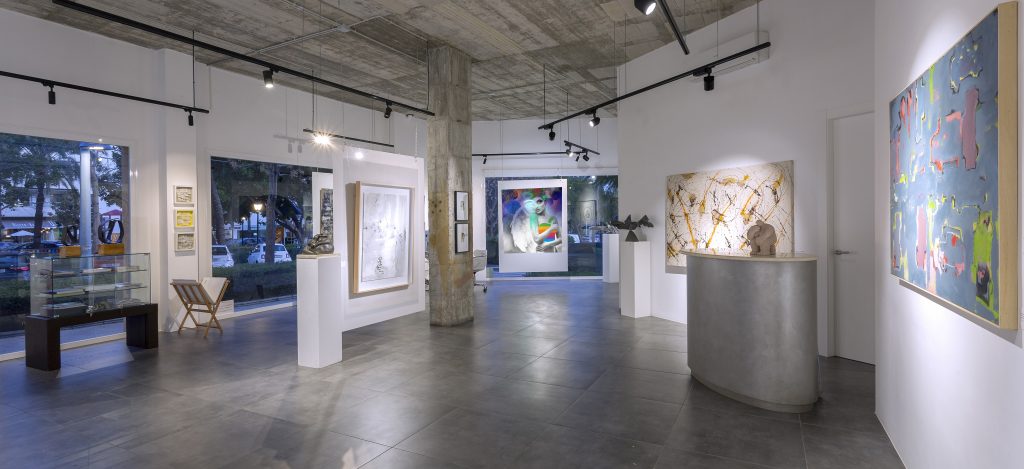
[vc_row][vc_column][vc_gallery interval=”3″ images=”9219,9154,9107,9103″ img_size=”full”][/vc_column][/vc_row][vc_row][vc_column][vc_column_text] ENTREVISTA A ES ARTE GALLERY Estamos encantados de poder compartir con nuestros lectores, este post realizado por la bloguera Sara Sanz Aldea en su blog de arte The Biombo donde busca promocionar y dar a conocer la gran calidad artística que podemos encontrar en España en cuanto a obras, galerías y artistas. En este post en concreto realiza una pequeña entrevista a la galería malagueña Es Arte Gallery, al ser la única galería que haya representado el panorama del arte andaluz en las ferias de Art Madrid y Just Mad 2020. [/vc_column_text][vc_empty_space height=”30px”][vc_column_text]Es Arte Gallery es la galería de Marifé Núñez, que considera que el arte tiene que ejercer su fuerza para cambiar conciencias. En su entrevista para The Biombo nos habla de las últimas ferias de arte en las que ha participado y de su compromiso social a través de diversas iniciativas. 1.- ¿Cuándo surge Es Arte Gallery y cómo fueron los comienzos? Es Arte Gallery surge en el 2017 desde la ilusión de crear mi propio estudio. Viendo que el espacio era perfecto para una galería y con mi experiencia como artista, además de mis conocimientos en marketing y publicidad, pensé que era una buena oportunidad de poder impulsar y trabajar en equipo con otros artistas, creando una galería independiente con una visión abierta e inclusiva del mercado del arte.[/vc_column_text][vc_empty_space height=”30px”][/vc_column][/vc_row][vc_row][vc_column][vc_btn title=”SEGUIR LEYENDO” style=”outline” shape=”square” color=”turquoise” size=”lg” align=”center” button_block=”true” link=”url:https%3A%2F%2Fsarasanzaldea.com%2Fentrevista-a-es-arte-gallery%2F||target:%20_blank|”][/vc_column][/vc_row]
Interview to Es Arte Gallery, Sara Sanz Aldea (The Biombo)
[vc_row][vc_column][vc_gallery interval=”3″ images=”9220,9155,9108,9104″ img_size=”full”][/vc_column][/vc_row][vc_row][vc_column][vc_column_text] INTERVIEW ES ARTE GALLERY We are pleased to share with our readers, this post made by the blogger Sara Sanz Aldea in her art blog The Biombo where she seeks to promote and publicize the great artistic quality that we can find in Spain in terms of works, galleries and artists. In this particular post she makes a small interview to the gallery from Málaga Es Arte Gallery, being the only gallery that has represented the Andalusian art scene in the Art Madrid and Just Mad 2020 fairs. [/vc_column_text][vc_empty_space height=”30px”][vc_column_text]Es Arte Gallery is the gallery of Marifé Núñez, who believes that art has to exercise its power to change consciences. In her interview for The Biombo she talks about the last art fairs she has participated in and her social commitment through various initiatives. 1.- When did Es Arte Gallery start and how did it begin? Es Arte Gallery arises in 2017 from the illusion of creating my own studio. Seeing that the space was perfect for a gallery and with my experience as an artist, as well as my knowledge in marketing and advertising, I thought it was a good opportunity to be able to promote and work as a team with other artists, creating an independent gallery with an open and inclusive vision of the art market.[/vc_column_text][vc_empty_space height=”30px”][/vc_column][/vc_row][vc_row][vc_column][vc_btn title=”CONTINUE READING” style=”outline” shape=”square” color=”turquoise” size=”lg” align=”center” button_block=”true” link=”url:https%3A%2F%2Fsarasanzaldea.com%2Fentrevista-a-es-arte-gallery%2F|target:%20_blank|”][/vc_column][/vc_row]
1er concurso de pintura infantil – Homenaje a Eugenio Pardini
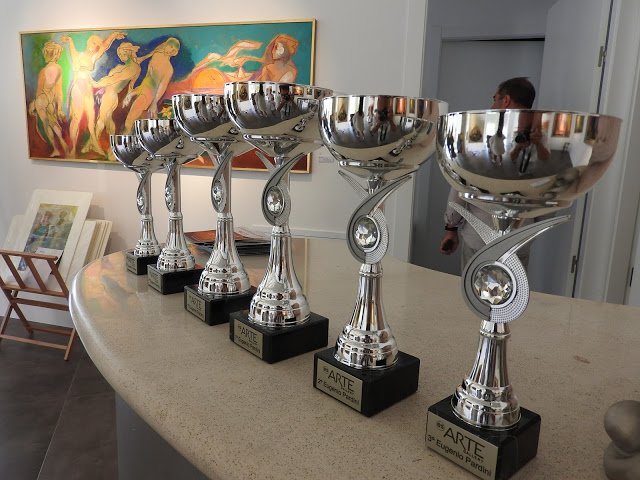
[vc_row][vc_column][vc_single_image image=”1281″ img_size=”full” alignment=”center” onclick=”link_image”][/vc_column][/vc_row][vc_row][vc_column][vc_column_text]El pasado domingo 15 de octubre 2017, tuvo lugar la entrega de premios del 1er concurso de pintura infantil de Es.Arte Gallery. Para esta convocatoria, nada más inspirador para los niños que las obras de Eugenio Pardini, sus vibrantes colores, sus dinámicas composiciones de paisajes, flores y pájaros fueron los motivos destacados en las creaciones de estos niños que con toda espontaneidad supieron captar el alma del artista.[/vc_column_text][/vc_column][/vc_row][vc_row][vc_column width=”1/2″][vc_single_image image=”1284″ img_size=”full” alignment=”center” onclick=”link_image”][vc_single_image image=”1287″ img_size=”full” add_caption=”yes” alignment=”center” onclick=”link_image” css=”.vc_custom_1518919852811{margin-top: 40px !important;}”][/vc_column][vc_column width=”1/2″][vc_column_text]Hay una cita de Pablo Picasso que decía: “En aprender a pintar como los pintores del Renacimiento tardé unos años; pintar como los niños me llevó toda la vida” Desde luego, una gran verdad, pues las pinturas y acuarelas de estos pequeños son verdaderas obras de arte. Para la entrega de premios contamos en el jurado, con la presencia de Augusto de Marsanich, Juan García Montero y Marifé Núñez. Hacer la selección fue casi imposible y al final nos tuvimos que basar en la mejor interpretación de Pardini, ya que todos podían haber sido ganadores. Desde es.Arte Gallery queremos dar las gracias a Oksana Kuzmenko por su gran dedicación y aportación en todo el desarrollo del evento. También agradecer su contribución a Papelería Los Arcos, El faro del Mediterráneo, Fernando Moreno y la marquetería Don Marco. Los trabajos estarán expuestos en la galería Es.Arte y en Fernando Moreno (bajo cita previa) hasta el día 20 de Octubre 2017.[/vc_column_text][/vc_column][/vc_row][vc_row][vc_column][vc_single_image image=”1285″ img_size=”full” alignment=”center” onclick=”link_image”][/vc_column][/vc_row][vc_row][vc_column][vc_column_text]Niños participantes: Seva Rulev, Liza Ruleva, Eva Grodol, Anna Ermolova, Alexey Ermolov, Mateja Stefanovic, Beatris Fedynova, María Gugina Milyaeva, María Valentina Vasilenko Gómez, Arnau Gómez Vasilenko, Alexander Cherepakhov, Evgenia Cherepakhova, Sofia Moreno Lima, Diana Vilenskaya, Sofi Molnar, Masha Belakova, Lola Nieto Martin, Violeta Vellod Diez, Artemii Belov, Daniel Belov, Mireia Westermark Diez, Veronica Manzon, Alexander Manzon, Rasul Rafikov, Rais Rafikov, Maria Lyudkovskaya, Yelizaveta Dmytryeva, Mykyta Dmitryev, Milana Rodionova, Maxim Rodionov, Angelina Rodionova, Bogdan Rodionov, Andrey Zhalkovskyy, Katerina Zhalkovska, Dasha Korneeva, Anastasia Klimova, Milana Ponomarenko, Anna Klimova, Misha Lokshin, Ekaterina Morgunova, Gabrielle Ebro Khakimova, Sasha Belakov, Nikita Gilevich, Daniela Westermark Diez…[/vc_column_text][/vc_column][/vc_row]
1st children’s painting contest – Homage to Eugenio Pardini
[vc_row][vc_column][vc_single_image image=”12090″ img_size=”full” alignment=”center” onclick=”link_image”][/vc_column][/vc_row][vc_row][vc_column][vc_column_text]Last Sunday 15th October 2017, the 1st children’s painting competition of Es.Arte Gallery took place. For this call, nothing was more inspiring for the children than the works of Eugenio Pardini, his vibrant colours, his dynamic compositions of landscapes, flowers and birds were the outstanding motifs in the creations of these children who with all spontaneity knew how to capture the soul of the artist.[/vc_column_text][/vc_column][/vc_row][vc_row][vc_column width=”1/2″][vc_single_image image=”12096″ img_size=”full” alignment=”center” onclick=”link_image”][vc_single_image image=”12092″ img_size=”full” add_caption=”yes” alignment=”center” onclick=”link_image” css=”.vc_custom_1518919852811{margin-top: 40px !important;}”][/vc_column][vc_column width=”1/2″][vc_column_text]There is a quote from Pablo Picasso that said: “It took me a few years to learn to paint like the Renaissance painters; painting like children took me a lifetime” Of course, a great truth, because the paintings and watercolours of these little ones are true works of art. For the awards ceremony we had Augusto de Marsanich, Juan García Montero and Marifé Núñez on the jury. Making the selection was almost impossible and in the end we had to rely on Pardini’s best performance, as they could all have been winners. From es.Arte Gallery we would like to thank Oksana Kuzmenko for her great dedication and contribution throughout the development of the event. We would also like to thank her for her contribution to Papelería Los Arcos, El faro del Mediterráneo, Fernando Moreno and the marquetería Don Marco. The works will be exhibited in the gallery Es.Arte and in Fernando Moreno (under previous appointment) until the 20th of October 2017.[/vc_column_text][/vc_column][/vc_row][vc_row][vc_column][vc_single_image image=”12094″ img_size=”full” alignment=”center” onclick=”link_image”][/vc_column][/vc_row][vc_row][vc_column][vc_column_text]Participating Children: Seva Rulev, Liza Ruleva, Eva Grodol, Anna Ermolova, Alexey Ermolov, Mateja Stefanovic, Beatris Fedynova, María Gugina Milyaeva, María Valentina Vasilenko Gómez, Arnau Gómez Vasilenko, Alexander Cherepakhov, Evgenia Cherepakhova, Sofia Moreno Lima, Diana Vilenskaya, Sofi Molnar, Masha Belakova, Lola Nieto Martin, Violeta Vellod Diez, Artemii Belov, Daniel Belov, Mireia Westermark Diez, Veronica Manzon, Alexander Manzon, Rasul Rafikov, Rais Rafikov, Maria Lyudkovskaya, Yelizaveta Dmytryeva, Mykyta Dmitryev, Milana Rodionova, Maxim Rodionov, Angelina Rodionova, Bogdan Rodionov, Andrey Zhalkovskyy, Katerina Zhalkovska, Dasha Korneeva, Anastasia Klimova, Milana Ponomarenko, Anna Klimova, Misha Lokshin, Ekaterina Morgunova, Gabrielle Ebro Khakimova, Sasha Belakov, Nikita Gilevich, Daniela Westermark Diez…[/vc_column_text][/vc_column][/vc_row]