
Exposición N-340 Dirección Suroeste

10 NOV 2022 Ver Catálogo de Exposición: Ver más Otras Exposiciones N-340 Dirección Suroeste EXPOSICIÓN COLECTIVA: CHANIVET, PABLO F-PUJOL, YEYO ARGÜEZ Si cercanias o distancias se miden con relación al tiempo, en este instante, y partiendo del concepto de conexión de la nacional 340, arteria principal que unía las provincias de Cádiz y Málaga, hemos acercado a tres autores gaditanos desde el km 0 (Cádiz) a Marbella en Es arte Gallery con discursos dispares pero unidos en paralelo por el origen y época.La obra de Chanivet descontextualiza el tiempo y los objetos aparentemente inconexos que retrata, pero que conllevan una intencionalidad elocuente a través de un despliegue de formas. Explora el carácter cambiante y no permanente de las cosas, reconstruyendo una realidad desordenada que camina formalmente hacia la abstracción. Yeyo Argüez utiliza los Elementos como el fuego, el aire, el agua o el propio elemento humano desde una perspectiva antropológica, como puntos de partida para generar su obra, que se materializa desde la pintura a la escultura, pasando por el dibujo, la instalación o el formato videográfico.En esta ocasión encontramos la unidad de una imagen de tendencia metafísica, mostrando una doble visión creadas por fragmentos circulares, formando una vibración visual de diferentes atmosferas creando diferentes realidades de una misma imagen. Por otro lado, las obras seleccionadas por Pablo Fernández-Pujol para el proyecto N-340, se enmarcan dentro de su línea de trabajo sobre los campos de color. La primera, “Paisajes confinados”, realizada durante la pandemia, presenta una pintura volumétrica compuesta por 5 paisajes pintados sobre lienzos solapados, que aluden a los momentos de reclusión impuestos por las “circunstancias”. La segunda obra, “Dark sun”, es un escena nocturna del rio Sena en Paris, un paisaje en movimiento que surge de uno de los primeros viajes post-pandémicos. Como decía M. Arcenegui, “la pintura no es representación sino acontecimiento personal”. Con esta propuesta, plantea desde la metáfora artística su visión vital sobre el encierro y la libertad. Compartir: Facebook WhatsApp X Threads
Exposición Marifé Núñez: Pájaros en mi cabeza
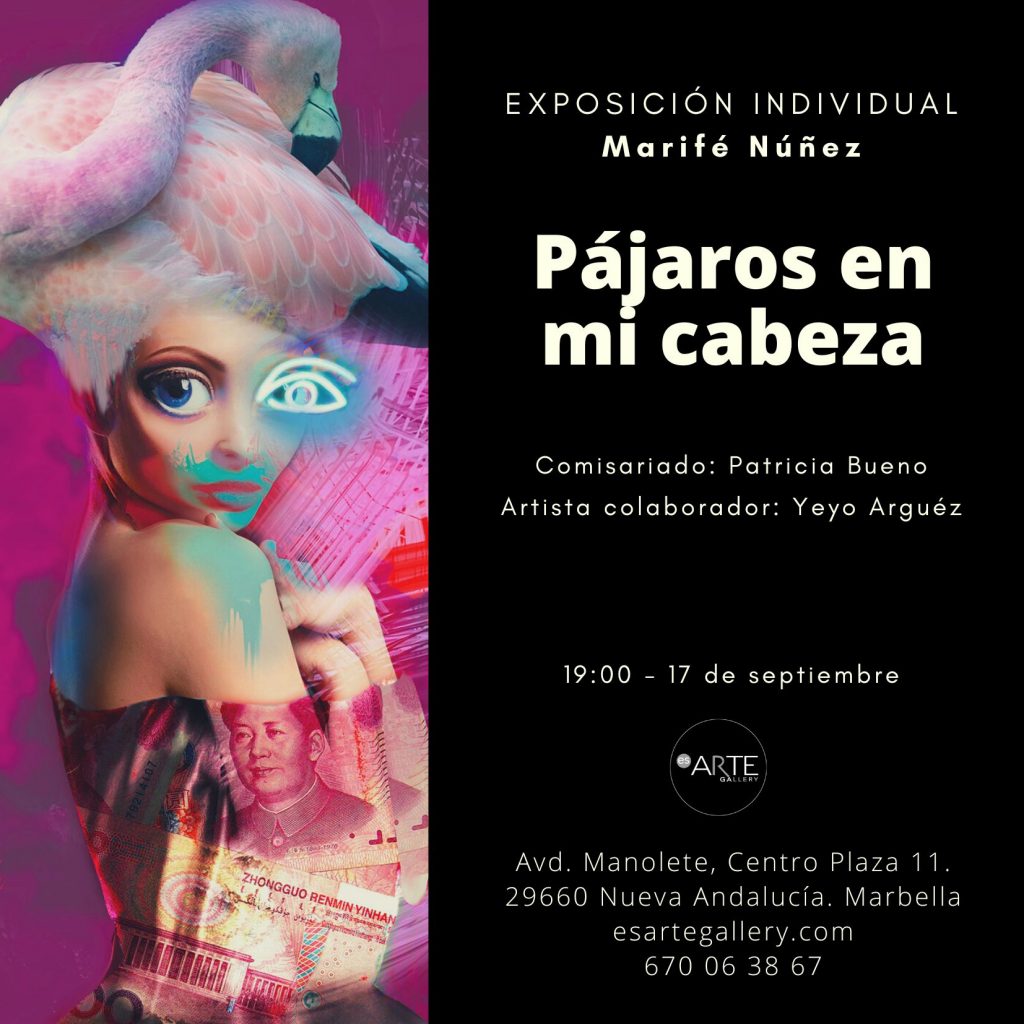
9 SEP 2022 Ver más sobre el artista: Merifé Núñez Otras Exposiciones Exposición Rafa B: Picasso desde mis ojos 18 OCT 2023 Exposicion Merifé Núñez: PÁJAROS EN MI CABEZA 9 SEP 2022 PÁJAROS EN MI CABEZA – EXPOSICIÓN INDIVIDUAL : MARIFÉ NÚÑEZ Texto crítico: Patricia Bueno La idea de este proyecto gira en torno a una ficción introspectiva y sensible, íntima, que indaga en torno a la evolución de las etapas de la vida de la mujer, desde una perspectiva actual, teniendo como eje la idea del empoderamiento femenino en pro de la búsqueda de la igualdad de género. La exposición se plantea como una reflexión personal de la propia artista, una proyección de la psique de la mujer actual, cristalizando deseos, anhelos y metas comunes a todas que trata de manera metafórica, a la vez que denota una muestra de afecto a lo que ya ha alcanzado desde su perspectiva vital, todo ello, desde criterios estéticos acordes, con una amplia coherencia y un sentido de la belleza absolutamente contemporáneo que a su vez respeta los cánones artísticos clásicos. En su configuración, el trabajo de Marifé Nuñez refleja la hegemonía del propio yo, un compendio de visiones en el que se combina el pensamiento crítico y la idea súbita de forma que se da poder a la voz del subconsciente humano como foco de voluntades, y desemboca en un mensaje común acerca de la evolución del prototipo de mujer actual de nuestro contexto, con el que la autora se identifica: decidida y curiosa y activa. Visualmente, la exposición consta de dos piezas instalativas, una videocreación y una serie de retratos bidimensionales, (titulados con la frase que da nombre al proyecto) llevados a cabo con técnica mixta. Esta serie consiste en imágenes femeninas envueltas en un halo espectral ácido y quimérico que contiene una gran carga simbólica. Los distintos pájaros que coronan a las mujeres que retrata, son símbolos de facetas propias que la artista quiere resaltar. La fuerza, la libertad o el dinero la belleza, la creatividad o el éxito, entre otros, son conceptos que se han asociado a lo largo de la historia al pavo real, la gallina o el flamenco. Por otra parte, gran el ojo de neón que presentan estas imágenes refuerza esta idea y la lleva a un plano más trascendental, místico, que alude a la evolución del ser humano a algo superior, casi transhumano que refuerza el vínculo con el espectador y dota de vida la imagen, como si de alguna manera, esta efigie, tuviese la capacidad de observar a quien le observa. Las protagonistas de estas imágenes tienen cierto aire regio como si de un “retrato a lo divino” de Zurbarán se tratase. Son mujeres normales que presentan atributos que la llevan a convertirse en una versión enaltecida de ellas mismas. Esta serie, de gran presencia en la muestra, son, sin duda un deseo de pervivencia y reafirmación que se pone de manifiesto a través del uso del retrato como emblema de poder cargados de intención pues “ representan, de alguna manera, a mujeres guerreras, napoleónicas, de época, con porte y simbología”, en palabras de su propia autora, pero lo hace llevándolo a su terreno. Plásticamente, esta serie está resuelta mediante diversos lenguajes. El uso de la fotografía, el collage, la pintura o la instalación de luz consigue revisionar el género de una manera valiente. Un arte directo y reflexivo lleno de honestidad y fortaleza, que le da gran importancia a las atmósferas, electrizantes y artificiosas, ficticias, que recrean un mundo soñado, deseable y utópico para habitar hoy en día, entre la poesía y la ilusión. Comisariada por Patricia Bueno. Compartir: Facebook WhatsApp X Threads
Solo Exhibition: Birds in my head
[vc_row][vc_column width=”1/3″][vc_single_image image=”18504″ img_size=”medium” alignment=”center” css_animation=”bounceInLeft”][/vc_column][vc_column width=”1/3″][vc_single_image image=”18506″ img_size=”medium” alignment=”center” css_animation=”bounceInLeft”][/vc_column][vc_column width=”1/3″][vc_single_image image=”18508″ img_size=”medium” alignment=”center” css_animation=”bounceInLeft”][/vc_column][/vc_row][vc_row][vc_column][vc_empty_space height=”24px”][vc_btn title=”Marifé Núñez” style=”classic” shape=”square” color=”black” size=”lg” align=”center” css_animation=”bounceInLeft” link=”url:https%3A%2F%2Fesartegallery.com%2Fartistas%2Fmarife-nunez|||”][vc_empty_space height=”24px”][/vc_column][/vc_row][vc_row][vc_column][vc_column_text] BIRDS IN MY HEAD SOLO EXHIBITION : MARIFÉ NÚÑEZ Critic Text: Patricia Bueno The idea of this project revolves around an introspective and sensitive, intimate fiction that explores the evolution of the stages of a woman’s life from a modern perspective, with the idea of female empowerment in the search for gender equality at its core. The exhibition is conceived as a personal reflection of the artist herself, a projection of the psyche of today’s woman, crystallising desires, wishes and goals common to all, which she deals with in a metaphorical way, while denoting a show of affection for what she has already achieved from her vital perspective, all from aesthetic criteria, with a broad coherence and an absolutely contemporary sense of beauty which in turn respects the classical artistic canons. In its configuration, the work of Marifé Nuñez reflects the hegemony of the self, a compendium of visions in which critical thought and sudden idea are combined in a way that gives power to the voice of the human subconscious as a focus of wills, and leads to a common message about the evolution of the prototype of the current woman of our context, with which the author identifies herself: determined and curious and active. Visually, the exhibition consists of two installation pieces, a video-creation and a series of two-dimensional portraits (titled with the phrase that gives the project its name) made with mixed media. This series consists of female images enveloped in an acid and chimerical spectral halo that contains a great symbolic charge. The different birds that crown the women she portrays are symbols of facets that the artist wants to highlight. Strength, freedom or money, beauty, creativity or success, among others, are concepts that have been associated throughout history with the peacock, the hen or the flamingo. On the other hand, the large neon eye in these images reinforces this idea and takes it to a more transcendental, mystical level, alluding to the evolution of the human being to something superior, almost transhuman, which reinforces the link with the spectator and brings the image to life, as if in some way this effigy had the capacity to observe the observer. The protagonists of these images have a certain regal air as if they were Zurbarán’s “portrait of the divine”. They are normal women with attributes that lead them to become an exalted version of themselves. This series, of great presence in the exhibition, is undoubtedly a desire for survival and reaffirmation which is made manifest through the use of the portrait as an emblem of power charged with intention, as “they represent, in some way, warrior women, Napoleonic, of the period, with bearing and symbolism”, in the words of the author herself, but she does so by taking it to her own terrain. Plastically, this series is resolved by means of different languages. The use of photography, collage, painting or the installation of light manages to revise the genre in a brave way. A direct and reflexive art full of honesty and strength, which gives great importance to atmospheres, electrifying and artificial, fictitious, that recreate a dreamed, desirable and utopian world to inhabit today, between poetry and illusion. Curated by Patricia Bueno. Artista colaborador: Yeyo Arguéz[/vc_column_text][vc_empty_space height=”24px”][vc_btn title=”DOWNLOAD EXHIBITION CATALOGUE” style=”classic” shape=”square” color=”black” size=”lg” align=”center” css_animation=”bounceInLeft” link=”url:https%3A%2F%2Fesartegallery.com%2Fwp-content%2Fuploads%2F2022%2F09%2FArt-Exhibition-Pajaros-en-mi-cabeza.pdf|||”][vc_empty_space height=”24px”][/vc_column][/vc_row]
Exposición Álbum: Chanivet – Paco Sanguino
[vc_row][vc_column width=”1/2″][vc_single_image image=”17945″ img_size=”medium” alignment=”center” css_animation=”bounceInLeft”][/vc_column][vc_column width=”1/2″][vc_single_image image=”18232″ img_size=”medium” alignment=”center” css_animation=”bounceInLeft”][/vc_column][/vc_row][vc_row][vc_column width=”1/2″][vc_empty_space height=”24px”][vc_btn title=”Chanivet” style=”classic” shape=”square” color=”black” size=”lg” align=”center” css_animation=”bounceInLeft” link=”url:https%3A%2F%2Fesartegallery.com%2Fartistas%2Fjose-antonio-chanivet|||”][vc_empty_space height=”24px”][/vc_column][vc_column width=”1/2″][vc_empty_space height=”24px”][vc_btn title=”Paco Sanguino” style=”classic” shape=”square” color=”black” size=”lg” align=”center” css_animation=”bounceInLeft” link=”url:https%3A%2F%2Fesartegallery.com%2Fartistas%2Fpaco-sanguino|||”][/vc_column][/vc_row][vc_row][vc_column][vc_column_text] ÁLBUM Chanivet – Paco Sanguino ARS LONGA, VITA BREVIS : COMO HACER UNA VANITAS EN LA POSVERDAD Patricia Bueno del Río En estos días que corren, acercarse al fatalismo no es algo que nos venga ajeno. Es más, surge como un resorte cada vez que plantamos los pies en la tierra, independientemente de la generación a la que pertenezcamos. Pero este baño realista, no es nimio o recurrente sino que denota la certeza de una necesidad de evasión que recuerda a los tópicos retóricos reflexivos sobre la finitud de las cosas. El instante, la fugacidad y lo transitorio se manifiesta en esta exposición mediante el uso del concepto “congelado” que se fundamenta, en este caso, en la captura de la imagen fotográfica o con la configuración de unos contemporáneos bodegones del recuerdo nos retrotraen a las vanitas. Álbum parece hablar del instante y del fragmento recogido en una cápsula y lo aborda desde dos enfoques. De este modo, el trabajo de Chanivet ( Puerto Real, Cádiz, 1964) es metafísico, simbólico y complejo. El de Sanguino (Sevilla, 1962 ) realista e inquietante, ambos, cargados de un significado personal y bello que invita a la introspección del deleite, y nos sumerge en un universo trascendental que desde lenguajes distintos aluden a la caducidad del momento. En ambos casos, esta cuestión valiosa no es etérea pues, tras ella, esta visión poética se torna sensata, comprometida, política, como si de alguna manera, estos autores llevasen el tempus fugit a la posverdad, convirtiéndose en comunicadores falaces que a través de lo correcto, lo mudable y lo fugaz promueven la perspectiva y la confianza. Si observamos detenidamente, podemos distinguir los planteamientos que lanzan estos autores a través de los elementos que aparecen: de un lado son personas, escenas configuradas que ayudan a rememorar momentos sencillos pero amables, del otro, ideas basadas en las cosas, elementos que aparentan ser inconexos pero que conllevan una intencionalidad elocuente a través de un despliegue de formas, objetos y fragmentos que apelan al despertar de los distintos sentidos: espectacularidad, alevosía y pensamiento barroco. Pero el contexto es muy distinto, porque en un mundo global e hiperconectado lo cognitivo-racional cede su lugar a lo cognitivo-emocional, y con ello, otorgan fortaleza a los símbolos, que atrapan con violencia a los sujetos anhelantes, súper-informados y descorazonados, mientras que ellos, ajenos a todo, abrazan de manera pertinente lo que encuentran en su entorno y les llega en clave de verosimilitud, un aspecto que, por otra parte, siempre fue ajeno al arte. Con todo, la exposición se plantea como un posicionamiento existencial en el que la diversión y el estupor suponen dos vías de escape al abordaje de los problemas de la verdad. Así, estas dos cuestiones, que acaban impregnando a estas imágenes, sirven como reflejo de una época turbada y desengañada pero que se torna positivista mediante la creación artística, reflejado con tintes de ilusión, teatralidad y sentido paradójico. Abril, 2022[/vc_column_text][vc_empty_space height=”24px”][vc_btn title=”DESCARGAR CATÁLOGO EXPOSICIÓN” style=”classic” shape=”square” color=”black” size=”lg” align=”center” css_animation=”bounceInLeft” link=”url:https%3A%2F%2Fesartegallery.com%2Fwp-content%2Fuploads%2F2022%2F04%2FExpo_Chanivet_PSanguino.pdf|||”][vc_empty_space height=”24px”][/vc_column][/vc_row][vc_row][vc_column][vc_media_grid grid_id=”vc_gid:1651659993504-e647aa96-61f2-2″ include=”18361,18376,18380,18382,18384,18386,18390,18388,18392,18394,18396,18398,18400,18402,18404,18406,18408,18410,18412,18414,18416,18418,18420,18422,18424,18426,18428″][/vc_column][/vc_row]
Exposición Álbum: Chanivet – Paco Sanguino
[vc_row][vc_column width=”1/2″][vc_single_image image=”17946″ img_size=”medium” alignment=”center” css_animation=”bounceInLeft”][/vc_column][vc_column width=”1/2″][vc_single_image image=”18232″ img_size=”medium” alignment=”center” css_animation=”bounceInLeft”][/vc_column][/vc_row][vc_row][vc_column width=”1/2″][vc_empty_space height=”24px”][vc_btn title=”Chanivet” style=”classic” shape=”square” color=”black” size=”lg” align=”center” css_animation=”bounceInLeft” link=”url:https%3A%2F%2Fesartegallery.com%2Fen%2Fartists%2Fjose-antonio-chanivet-english|||”][vc_empty_space height=”24px”][/vc_column][vc_column width=”1/2″][vc_empty_space height=”24px”][vc_btn title=”Paco Sanguino” style=”classic” shape=”square” color=”black” size=”lg” align=”center” css_animation=”bounceInLeft” link=”url:https%3A%2F%2Fesartegallery.com%2Fen%2Fartists%2Fpaco-sanguino|||”][/vc_column][/vc_row][vc_row][vc_column][vc_column_text] ALBUM Chanivet – Paco Sanguino ARS LONGA, VITA BREVIS : COMO HACER UNA VANITAS EN LA POSVERDAD Patricia Bueno del Río In these days, approaching fatalism is not something that is alien to us. What’s more, it springs to mind every time we put our feet on the ground, regardless of the generation to which we belong. But this realistic bath is not insignificant or recurrent, but rather denotes the certainty of a need for evasion, reminiscent of rhetorical reflective clichés on the finiteness of things. The instant, the fleeting and the transitory are manifested in this exhibition through the use of the concept of “frozen” which is based, in this case, on the capture of the photographic image or with the configuration of contemporary still lifes of memory that take us back to the vanitas. Álbum seems to speak of the instant and the fragment collected in a capsule and approaches it from two angles. Thus, the work of Chanivet (Puerto Real, Cádiz, 1964) is metaphysical, symbolic and complex. That of Sanguino (Seville, 1962) is realistic and disturbing, both charged with a personal and beautiful meaning that invites introspection and delight, and immerses us in a transcendental universe that from different languages allude to the expiration of the moment. In both cases, this valuable question is not ethereal because, behind it, this poetic vision becomes sensible, committed, political, as if in some way, these authors were taking the tempus fugit to post-truth, becoming fallacious communicators who, through the correct, the changeable and the fleeting, promote perspective and trust. If we observe carefully, we can distinguish the approaches that these authors launch through the elements that appear: on the one hand they are people, configured scenes that help to recall simple but pleasant moments, on the other, ideas based on things, elements that appear to be unconnected but that carry an eloquent intentionality through a display of forms, objects and fragments that appeal to the awakening of the different senses: spectacularity, frivolity and baroque thought. But the context is very different, because in a global and hyper-connected world the cognitive-rational gives way to the cognitive-emotional, and with it, they give strength to the symbols, which violently trap the yearning, super-informed and disheartened subjects, while they, oblivious to everything, embrace in a pertinent manner what they find in their surroundings and it comes to them in the key of verisimilitude, an aspect that, on the other hand, has always been alien to art. All in all, the exhibition is conceived as an existential positioning in which amusement and astonishment are two ways of escaping from the problems of truth. Thus, these two questions, which end up impregnating these images, serve as a reflection of a troubled and disillusioned era, but which becomes positivist through artistic creation, reflected with tinges of illusion, theatricality and paradoxical sense. April, 2022″[/vc_column_text][vc_empty_space height=”24px”][vc_btn title=”DOWNLOAD CATALOGUE” style=”classic” shape=”square” color=”black” size=”lg” align=”center” css_animation=”bounceInLeft” link=”url:https%3A%2F%2Fesartegallery.com%2Fwp-content%2Fuploads%2F2022%2F04%2FChanivet_Sanguino.pdf|||”][vc_empty_space height=”24px”][/vc_column][/vc_row][vc_row][vc_column][vc_media_grid grid_id=”vc_gid:1651089547869-8dbfd5e0-1633-2″][/vc_column][/vc_row]
Exposición Rosewood: Imaginario de Lejanía
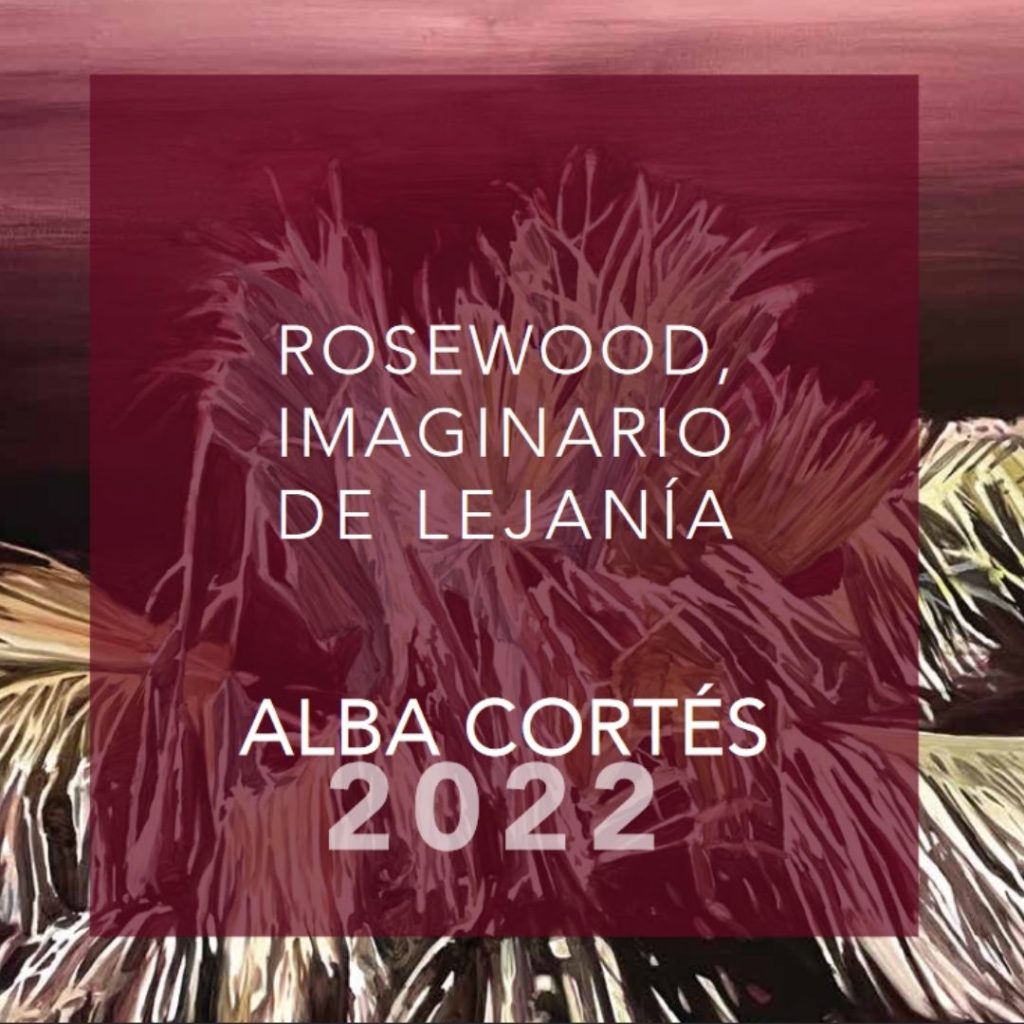
[vc_row][vc_column width=”1/3″][vc_single_image image=”17695″ img_size=”medium” alignment=”center” css_animation=”bounceInLeft”][/vc_column][vc_column width=”1/3″][vc_single_image image=”17744″ img_size=”medium” alignment=”center” css_animation=”bounceInLeft”][/vc_column][vc_column width=”1/3″][vc_single_image image=”17746″ img_size=”medium” alignment=”center” css_animation=”bounceInLeft”][/vc_column][/vc_row][vc_row][vc_column][vc_empty_space height=”24px”][vc_btn title=”Alba Cortés” style=”classic” shape=”square” color=”black” size=”lg” align=”center” css_animation=”bounceInLeft” link=”url:https%3A%2F%2Fesartegallery.com%2Fartistas%2Falba-cortes|||”][vc_empty_space height=”24px”][/vc_column][/vc_row][vc_row][vc_column][vc_column_text] Rosewood, imaginario de lejanía – Alba Cortés – El aroma exótico de la pintura Texto crítico: Patricia Bueno «El pueblo de Holcomb está en las elevadas llanuras trigueras del oeste de Kansas, una zona solitaria que otros habitantes de Kansas llaman «allá». (Truman Capote, primeras líneas de «A sangre fría»). Deslizarte sensorialmente a través de tus propios pensamientos es una manera tenue – o incluso cómoda- de buscar un bienestar efímero, inconsistente e irreal , pero que es tan necesario como efectivo para mantener el ansiado equilibrio que todos buscamos, y que, en esta exposición, parece convertirse, además, en el primer pensamiento sugestivo cuando se contempla en su totalidad, el grueso de las obras que la componen. La pintura que lleva a cabo Alba Cortés ( Cáceres, 1991) para este proyecto, es especialmente visual a la vez que delicada. Llena de matices e intencionalidad, la artista presenta en Rosewood, imaginario de lejanía una serie de visiones espaciales parciales cuya presentación juega, por una parte, con los puntos de vista y los tamaños para demostrar que, en este caso, es ella quien nos indica en qué forma -y no otra -, se debe ver sus paisajes, como si de alguna manera, le dijese a un espectador que quiera ojear algo así como : ¡Sí!, es ahí, párate justo ahí. Y este “justo ahí” es cercano al objeto protagonista, porque la vista que se ofrece es de fragmento, un paisaje reducido a un segmento de vegetación que parece fotografiado, muy contrastado, sugestivo y sugerente, que nos habla de una visión del exotismo descontextualizado, que parece concebirse con una intención clara de acrecentar el engaño que de por sí, supone la representación con tendencia objetiva moderada de la naturaleza, porque en su pintura, el realismo sufre un proceso de metamorfosis, que se produce a través de la evolución del concepto de imitación, lo que consigue recurriendo a una inteligente apelación al antiguo concepto estético de la mimesis, pero con una intención clara de evidenciar que el espíritu de los tiempos ha cambiado. Su trabajo emana, por tanto, dulzura y subjetividad, y nos invita a soñar con los lugares imaginados cuyo viaje cerebral nos despierta sacudidas sensoriales como puedan ser un olor desértico, un vacío situacional, o un calor seco agradable del atardecer – o amanecer- de un paraíso soñado, descontextualizado, que parece estar siendo visto a través de una lente tamizada. En cualquier caso, estas representaciones parecen remitirnos a un lugar aislado, quizás a un no lugar, porque la luz que presenta, tampoco permite la comprensión lógica del paso del tiempo, y eso lo convierte en un escenario de tregua, entre lo la lejano y lo irreal, como continuidad trasmutada a través de una mirada hábil. En definitiva, una pintura que emana perspicacia y denota el talante de perfección que siempre ha acompañado a esta artista quién, nos invita, con este proyecto, a contemplar y pensar en la apreciación controlada de una naturaleza sublimada, con una intención de dar belleza al propio naturalismo o a lo decadente, ya sea mediante la presentación de sus vigorosas vegetaciones en estado salvaje, o bien, a través de sus cielos envolventes y rotundos. Patricia Bueno del Río Marzo, 2022 [/vc_column_text][vc_empty_space height=”24px”][vc_btn title=”DESCARGAR CATÁLOGO EXPOSICIÓN” style=”classic” shape=”square” color=”black” size=”lg” align=”center” css_animation=”bounceInLeft” link=”url:https%3A%2F%2Fesartegallery.com%2Fwp-content%2Fuploads%2F2022%2F03%2FCATALGO.pdf|||”][vc_empty_space height=”24px”][/vc_column][/vc_row][vc_row][vc_column][vc_media_grid grid_id=”vc_gid:1649677741180-7c71f64c-a169-0″ include=”18143,18141,18145,18139,18135,18133,18137,18131,18127,18125,18123,18119″][/vc_column][/vc_row]
Rosewood Exhibition: Imaginary of Remoteness
[vc_row][vc_column width=”1/3″][vc_single_image image=”17695″ img_size=”medium” alignment=”center” css_animation=”bounceInLeft”][/vc_column][vc_column width=”1/3″][vc_single_image image=”17744″ img_size=”medium” alignment=”center” css_animation=”bounceInLeft”][/vc_column][vc_column width=”1/3″][vc_single_image image=”17746″ img_size=”medium” alignment=”center” css_animation=”bounceInLeft”][/vc_column][/vc_row][vc_row][vc_column][vc_empty_space height=”24px”][vc_btn title=”Alba Cortés” style=”classic” shape=”square” color=”black” size=”lg” align=”center” css_animation=”bounceInLeft” link=”url:https%3A%2F%2Fesartegallery.com%2Fartistas%2Falba-cortes|||”][vc_empty_space height=”24px”][/vc_column][/vc_row][vc_row][vc_column][vc_column_text] Rosewood, imaginary of remoteness – Alba Cortés – The exotic aroma of painting Critical Text: Patricia Bueno “The town of Holcomb is on the high wheat plains of western Kansas, a lonely area that other Kansas people call ‘back there.’” (Truman Capote, opening lines of “In Cold Blood“). To slide sensorially through your own thoughts is a tenuous – or even comfortable – way of seeking an ephemeral, inconsistent and unreal well-being, but which is as necessary as it is effective to maintain the desired balance we all seek, and which, in this exhibition, also seems to become the first suggestive thought when the bulk of the works that compose it are contemplated in their totality. The painting carried out by Alba Cortés (Cáceres, 1991) for this project is especially visual and delicate at the same time. Full of nuances and intentionality, the artist presents in Rosewood, imaginary of remoteness a series of partial spatial visions whose presentation plays, on the one hand, with the points of view and the sizes to demonstrate that, in this case, it is she who indicates us in which form -and no other-, her landscapes should be seen, as if in some way, she were telling a spectator who wants to look something like: Yes, it is there, stand right there. And this “right there” is close to the protagonist object, because the view offered is a fragment, a landscape reduced to a segment of vegetation that seems photographed, very contrasted, suggestive and suggestive, which speaks of a vision of exoticism decontextualized, which seems to be conceived with a clear intention to increase the deception that in itself, This is because in his painting, realism undergoes a process of metamorphosis, which is produced through the evolution of the concept of imitation, which he achieves by resorting to an intelligent appeal to the ancient aesthetic concept of mimesis, but with a clear intention of showing that the spirit of the times has changed. His work emanates, therefore, sweetness and subjectivity, and invites us to dream of imagined places whose cerebral journey awakens sensory jolts such as a desert smell, a situational void, or a pleasant dry heat of the sunset -or sunrise- of a dreamed paradise, decontextualized, which seems to be seen through a sieved lens. In any case, these representations seem to refer us to an isolated place, perhaps to a non-place, because the light it presents does not allow the logical understanding of the passage of time, and that makes it a scenario of truce, between the distant and the unreal, as a continuity transmuted through a skillful gaze. In short, a painting that emanates insight and denotes the mood of perfection that has always accompanied this artist who, with this project, invites us to contemplate and think about the controlled appreciation of a sublimated nature, with an intention to give beauty to naturalism itself or to the decadent, either through the presentation of its vigorous vegetation in its wild state, or through its enveloping and emphatic skies. Patricia Bueno del Río March, 2022 [/vc_column_text][vc_empty_space height=”24px”][vc_btn title=”DOWNLOAD EXHIBITION CA CATALOGUE” style=”classic” shape=”square” color=”black” size=”lg” align=”center” css_animation=”bounceInLeft” link=”url:https%3A%2F%2Fesartegallery.com%2Fwp-content%2Fuploads%2F2022%2F03%2FCATALGO.pdf|||”][vc_empty_space height=”24px”][/vc_column][/vc_row][vc_row][vc_column][vc_media_grid grid_id=”vc_gid:1649677741180-7c71f64c-a169-0″ include=”18143,18141,18145,18139,18135,18133,18137,18131,18127,18125,18123,18119″][/vc_column][/vc_row]